
Flying across Brazil no longer wrecks your budget. Even travelers in Brazil are snagging one-way seats for R$200 or less when they use smart timing, proven tools, and flexible habits.
The guide below delivers every tactic you need, step by step, to repeat those results throughout 2025.
How R$200 Flights Became Achievable in 2025
Airlines lean on dynamic pricing to fill empty seats fast and to outmaneuver competitors.
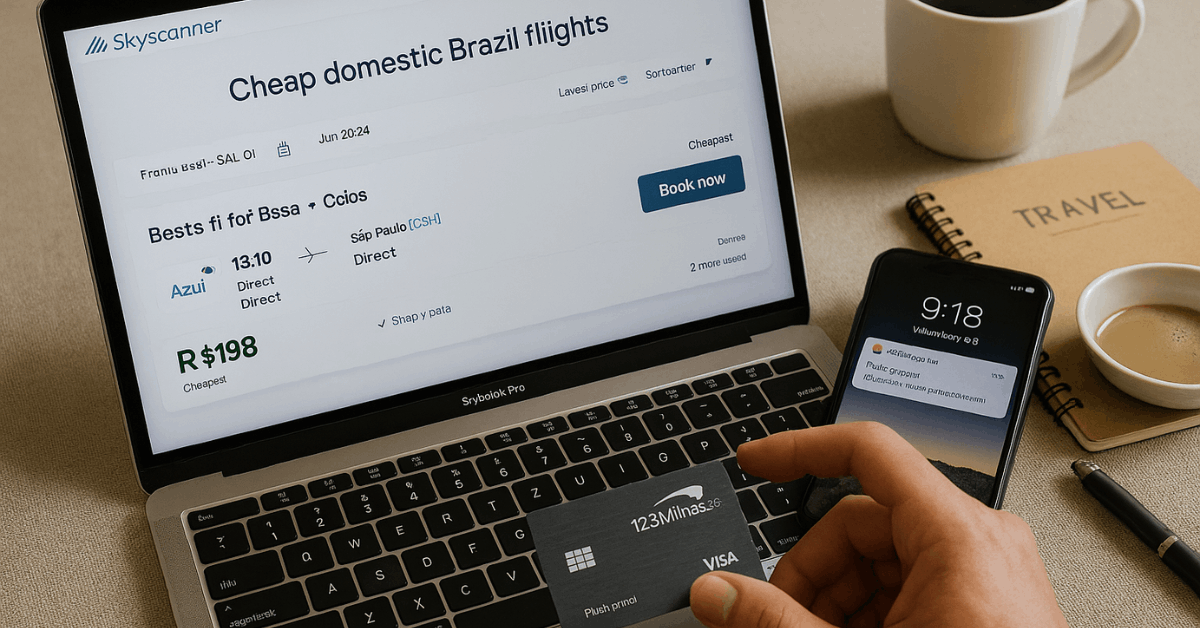
Promotions, algorithm-driven price drops, and new regional routes combine with real-time tracking tools to bring sub-R$200 tickets within reach for anyone ready to act quickly.
Key Pricing Triggers at Work:
- Flash discounts on undersold flights often appear overnight when algorithms flag low demand.
- Seasonal promotions tied to holidays, travel fairs, or airline anniversaries drop prices aggressively for short windows.
- New route launches prompt carriers to stimulate demand with introductory fares well below the market average.
Timing Your Booking for Sub-R$200 Fares
Pinpointing the right moment transforms browsing into booking success. Early weekday mornings show the deepest discounts because search volume is low and inventory resets overnight.
Practical timing rules:
- Reserve domestic seats 30–90 days before departure to strike the optimal price point.
- Pick departure dates on Tuesdays or Wednesdays; midweek demand dips keep fares compressed.
Skip school breaks, long weekends, and major holidays unless a flash promotion explicitly targets those periods.
Flexibility yields the lowest cost. Adjust travel by a couple of days in either direction, and your R$200 target becomes realistic nearly every month of the year.
Smart Platforms That Surface the Lowest Prices
Modern fare engines sweep thousands of data points each minute. Prioritize tools that consistently expose under-market deals so you waste zero time chasing inflated quotes.
| Platform | Notable Strength | Extra Edge |
| Google Flights | Rapid price-trend graph and explore map | Tracks entire months in a single view |
| Skyscanner | Broad airline coverage | Combines “Everywhere” search with flexible date calendars |
| 123Milhas | Mileage-based discounts | Converts unused miles into cash fares |
| MaxMilhas | Last-minute opportunities | Pushes real-time app alerts for flash deals |
| Kayak Brasil | Robust filters and fare alerts | Offers “Track prices” to automate monitoring |
Set alerts on at least two of these services. Doubling coverage catches fares one platform might miss for a specific route or time frame.
Automate Price Tracking and React Instantly
Manual searching drains time and raises the risk of missing limited-inventory deals. Activate in-app alerts for chosen routes, broad date ranges, or even “anytime” destinations.
Push notifications arrive the moment a fare slips under your preset limit, ideally set at R$200, letting you lock seats before the public rush begins.
Embrace Mobile-Exclusive and App Deals
Carriers reward app users with promotions hidden from desktop portals. Install LATAM, Gol, and Azul applications, allow notifications, and check in daily.
Some app-only coupons disappear in minutes, yet those fleeting offers routinely cut R$30–R$60 from already discounted seats.
Airlines Leading the Promo Race
Focus on these airlines if you want first access to the cheapest ticket drops across Brazil and nearby routes.
- Stay alert to these carriers, which historically launch the boldest fare drops:
- LATAM Airlines – Mega Promo campaigns slash domestic and regional routes multiple times per year.
- Gol Linhas Aéreas – App-only and WhatsApp blasts often post sub-R$200 seats overnight.
- Azul Linhas Aéreas – Early-bird specials reward travelers who purchase several months ahead, especially on secondary routes.
Follow each airline’s Telegram or X (Twitter) promo channel to grab discount codes before they hit mainstream newsletters.
Combine Points, Cashback, and Coupons for Extra Savings
Leverage stacking tactics when sticker prices hover slightly above your R$200 threshold.
Credit-card ecosystems such as Livelo, Esfera, and Smiles let you swap points for partial payment, while cashback apps like Méliuz refund a percentage post-purchase.
Layering a R$40 coupon from Pelando on top of points redemptions often drives net cost to R$170–R$190.
Flexibility Strategies: Dates, Airports, and Routes
Small adjustments create substantial savings:
- Choose midweek takeoffs because Tuesday afternoon capacity regularly exceeds demand.
- Depart from secondary hubs like Campinas (VCP) or Confins (CNF) rather than the busiest city airports.
- Search entire-month calendars in Skyscanner or Google Flights to reveal hidden low-fare pockets.
Accepting a two-hour bus ride to or from a quieter airport can slice airfare by 25 percent or more.
Overnight Flights, Stopovers, and Hybrid Itineraries
Red-eye departures keep planes full and prices low. A longer itinerary involving one stopover may cost R$60–R$90 less than a nonstop option.
Pair air segments with intercity buses for last-mile legs to smaller destinations, and the total journey cost frequently stays under your target without sacrificing much comfort.
Privacy Tools That Prevent Fare Creep
Airfare sites watch cookies and IP addresses, nudging prices upward after repeated searches. Protect your wallet through two simple moves:
- Open each search in Incognito Mode, clearing cookies between sessions.
- Activate a VPN and rotate exit countries; many travelers report lower quotes when appearing to search from Argentina or Chile.
- Neither step guarantees savings every time, yet both preserve baseline prices long enough to complete a booking without artificial inflation.
Common Booking Mistakes to Avoid
A lapse in attention can erase earlier savings. Keep these pitfalls off your radar:
- Procrastinating beyond the 90-day window when algorithms start raising prices on remaining seats.
- Assuming round-trip is cheaper, sometimes two one-ways cost less than a bundled fare.
- Ignoring baggage rules—carry-on only tickets trim fees, but adding a checked bag later often doubles the final price.
- Booking through unverified third-party sites that lack guaranteed seat assignments or responsive customer service.
Real-World Examples Proving R$200 Fares Exist
These recent examples confirm that sub-R$200 flights aren’t rare, they’re real, fast-moving deals that reward quick action.
| Date (2025) | Route | Airline | Final Price | How It Was Found |
| 12 March | São Paulo ➔ Curitiba | Gol | R$199 | WhatsApp flash alert |
| 23 April | Recife ➔ Salvador | LATAM | R$198 | Black Friday-style Travel Week sale |
| 16 May | Brasília ➔ São Paulo | Azul | R$179 | App-exclusive early-bird code |
Each seat sold out in under 24 hours, underscoring why instant alerts and swift payment details matter.
Quick-Reference Checklist for Rapid Booking
Use this ready-to-go list while hunting deals:
- Keep travel dates and airports flexible within a five-day range.
- Install airline plus aggregator apps on every device.
- Enable push alerts capped at R$200 per leg.
- Stack points, cashback, and valid promo codes in one transaction.
- Complete payment immediately after verification—hesitation kills bargains.
Evergreen 2025 Travel Hacks for Global Travelers
Continuous bargain hunting thrives on disciplined habits:
- Browse early Monday or Tuesday mornings when fewer users compete.
- Use a foreign-currency payment if the exchange rate yields a net discount.
- Delete cookies after each search session.
- Travel with a carry-on only to escape add-on fees.
- Join at least one frequent-flyer program, even if trips are sporadic.
- Track off-season campaigns via state tourism boards promoting regional traffic.
Conclusion
R$200 flights exist all year, and securing them relies on preparation rather than luck. Equip yourself with flexible calendars, multi-platform alerts, and stacked rewards, then act decisively when your phone buzzes.
Follow the strategies above, and you will board planes in 2025 at prices most travelers in Brazil still believe are impossible.